Red Wine Racking: How to Check a Fall Batch at Six Weeks

Around six weeks after starting a fall red wine batch, it can be useful to pause and evaluate what the wine is doing. The exact timing varies by kit, juice, yeast, temperature, and fermentation progress, so treat the calendar as a reminder to inspect and measure—not as an automatic racking deadline.
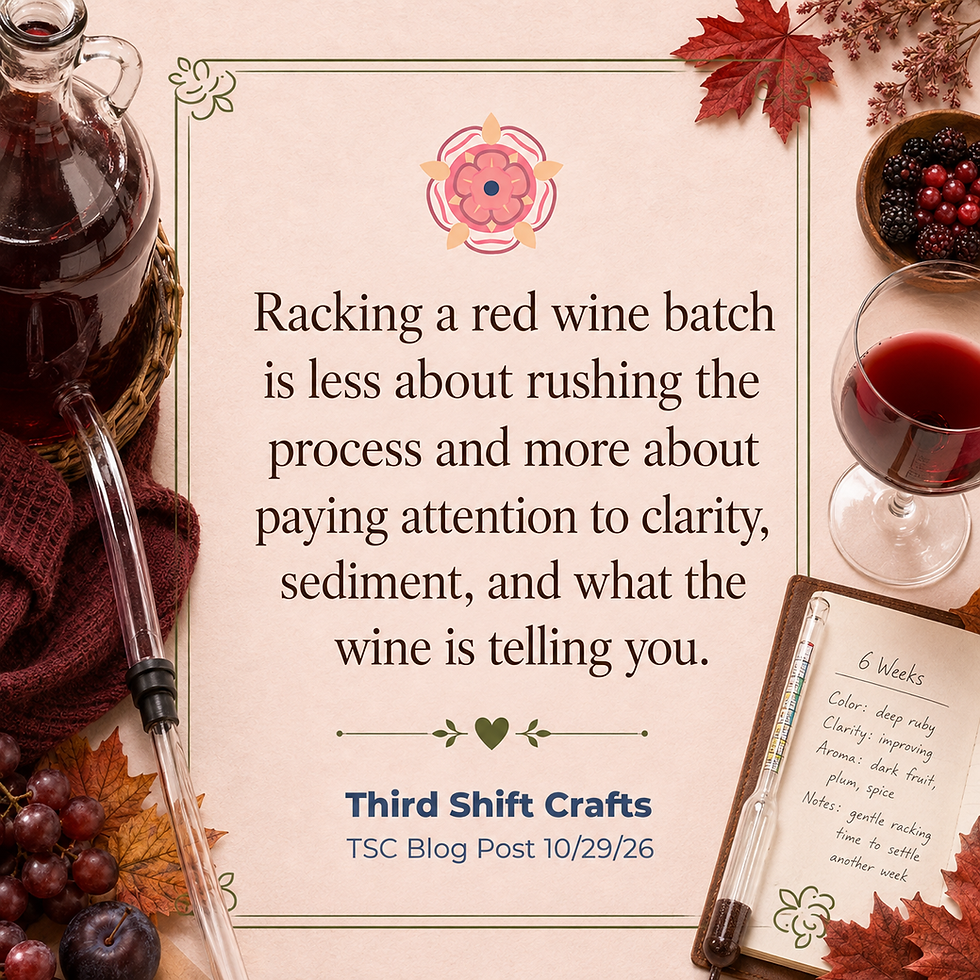
Start With the Instructions for Your Batch
Before changing anything, review the directions supplied with your wine kit, juice bucket, yeast, and additives. Those instructions should take priority over a general timeline because they account for the ingredients and process you are actually using.
What to Observe
Look for a settled layer of lees, gradual clearing, a secure airlock, and no obvious signs of leakage or excessive headspace. Young red wine may still look hazy and taste sharp. That alone does not mean something is wrong.
Smell a sanitized sample. Fresh fruit, yeast, alcohol, sulfur that quickly dissipates, and other unfinished aromas can appear during development. Persistent vinegar, nail-polish-remover, moldy, or strongly rotten odors deserve closer investigation before proceeding.
Measure Before You Decide
Use a sanitized hydrometer to record specific gravity. A single number is less useful than a pattern: stable readings taken several days apart help confirm that fermentation has finished. Compare the result with the expected finishing range for your recipe or kit.
Temperature should remain within the range recommended for the yeast and stage of your process. Avoid relying on one universal temperature target, since different yeasts and winemaking methods have different needs.
Sulfite additions should be based on your recipe, pH, testing method, and previous additions. Do not add a fixed amount simply because six weeks have passed. When testing is unavailable, follow the kit or supplier instructions rather than guessing.
When Racking Makes Sense
Racking may be appropriate when fermentation is complete, a meaningful layer of sediment has accumulated, and the process you are following calls for a transfer. Sanitize the receiving vessel and siphoning equipment, move the wine gently, and leave the sediment behind without splashing.
After the transfer, minimize headspace using the method recommended for your batch and reinstall a sanitized airlock. Record the date, gravity, observations, and any additions in your winemaking notes.
Taste for Problems, Not Perfection
A six-week-old red wine is unfinished. It may taste acidic, tannic, yeasty, thin, or slightly carbonated. The goal is not to decide whether it is award-worthy. The goal is to notice whether it appears healthy and is progressing as expected.
Measure, document, protect the wine from oxygen and contamination, and give it time. Patience is part of the craft.


Comments